

“Rāma kept His promise in Ayodhyā; now it is upon us to keep ours to Bhārata.” – Gurunatha
Ayodhyā, the elders taught us, is a moksha-purī; a city where the very dust remembers the way to liberation. For my generation, it was also a scar. A question. A promise left hanging in the air.
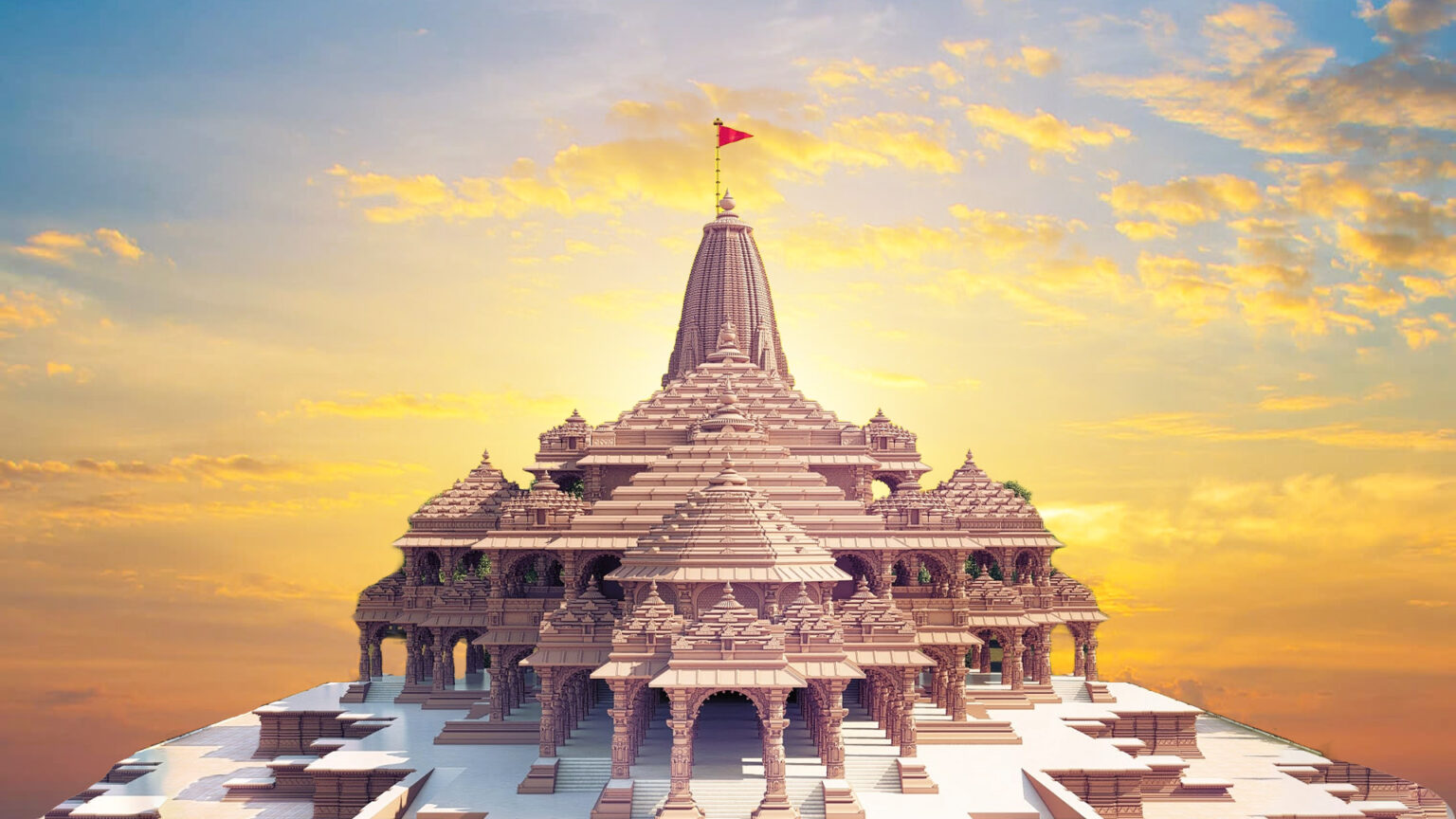
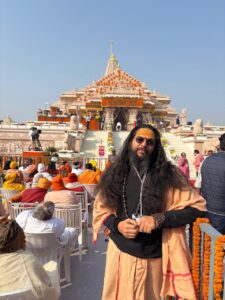
On Vivah Panchami, 25 November 2025, when the saffron Dharma Dhwaj climbed the shikhara of the new Śrī Rāma Janmabhūmi Mandir, hoisted by the hands of Shri Narendra Modiji and Param Pujya Mohanji Bhagwat, in the presence of Yogiji, Anandiben Patel ji, and an ocean of saffron-robed devotion – I felt that ancient Sankalpa settle into place. Ayodhyā’s sky stood calm, yet across Bhārata a great inner tremor rose, like a kingdom remembering its forgotten crown.
I sat quietly in that crowd and spoke inwardly to Rāma:
“You have kept your word. Now give us the courage to keep ours.”
Manava-Maya Tantra and a Line in the Sankalpa
My journey with Ayodhyā began far from Uttar Pradesh, inside the inner landscape of Manava-Maya Tantra. From 1991 onward, Śrī Rāma was not just a deity of worship; He became the very discipline of my spiritual practice. His maryādā shaped how I stood, how I spoke, how I carried joy, how I carried hurt.
Then came 6 December 1992.
The whole country argued about what that day meant. In my anusthāna, one simple line got added. From the next dawn, every sankalpa carried an extra sentence :
"May Śrī Rāma’s Mandir rise again on His Janmabhūmi in Ayodhyā. May His Dhvaja fly again over that sacred soil.”
This line travelled with every japa, every homa, every vrata for years. A quiet sentence, held steady like a lamp shielded from the wind. My role felt like Alilu Seva — the small squirrel in the Rāmāyaṇa gathering grains of sand for the Setu with unwavering devotion. While vānaras threw mountains and boulders; the squirrel carried dust. Both receiving the Lord’s divine touch.
When I look back at the milestones – the Supreme Court judgment of November 2019 in favour of Ram Lalla Virājman, the creation of the Śrī Rāma Janmabhūmi Tīrtha Kṣetra trust, the bhūmi-pūjan and śilānyās on 5 August 2020, the Prāṇa-Pratiṣṭhā of Ram Lalla on 22 January 2024, and now this Dhwajarohan sealing the temple’s completion – I feel a deep gratitude. These are great, public events, yet behind them stand countless unseen vows whispered like mine.
A squirrel has no need to name its service; it dances lightly across the completed Setu, content in the knowledge that its small grains found their place.
Gwalior: Fire in the Veins and Steel on the Wrists
During the 1992 Kar Seva, youth pushed me out of the solitude of sādhana into the dust of the street. I travelled as a young karyakarta for the karseva movement, and in Gwalior I was arrested. At eighteen, philosophy flees the moment steel touches your wrists. The handcuffs were cold, the ground unfamiliar, and a single desperate worry rose like fire in the throat: “Will Ayodhyā slip away again, just when I thought I was close?”
Those days in custody carved a lesson into the mind: Ayodhyā pulls like a magnet. People from villages, towns, and cities moved because the name “Rāma Janmabhūmi” tugged at something ancestral inside them.
When the agitation phase eased, the movement flowed into a quieter channel: the Ram Janmabhūmi Nyās fund drive. I walked along lanes with a small bag and receipt book, requesting contributions of ₹1.25, ₹5, ₹10 – the symbolic price of a brick. Grandmothers opened rusted steel boxes; small shopkeepers counted coins as carefully as if counting their own breath; labourers gave from daily wages. Courtrooms were distant, Ayodhyā far away, but one longing bound them all: that when the Mandir rose, a single brick in those sacred walls would carry the weight of their devotion.
Those little receipts were paper. The sankalpa behind them was rock solid.
Balidān: The Hidden Columns of the Mandir
When I utter the word “Ayodhyā” today, an entire procession passes through the heart: sadhus, karsevaks, quiet workers of organisations, nameless villagers. Some returned with scars, some with broken bones, some never returned at all.
One face comes sharply into focus – Keshava from Hassan. He was among the first karsevaks to climb the Babri structure. In that tumult, he slipped and fell. His body survived, his faith remained unshaken, but he lost hearing in one ear. From then on, he has lived with that silence as a constant reminder of one fierce moment on foreign stone.
On the morning of Dhwajarohan, as the shankha-naada sounded and the cry of “Jai Śrī Rāma” throughout Ayodhyā, I closed my eyes and thought of him. The ear may have failed once upon a time; the ātmā hears differently – Keshava must have heard it loud and clear. In that shankha-naada, I too felt justice rendered for all those who had poured their youth, health, and hope into this cause.
These are the unseen pillars of the Mandir. The marble rests upon their balidān.
The Flag: Surya, Om, and the Kovidara
The Dharma Dhwaj that rose was ten feet high and twenty feet long, a saffron triangle edged in gold, stitched in three sturdy layers. It carried three symbols that speak like sutras.
Surya, blazing at its heart, recalls Rāma’s Sūryavaṃśa lineage. The sun does not petition for respect; it simply shines. This emblem tells the world that the line continues. A civilization may pass through shadow, but its source remains luminous. Shining without bias on every iota on earth without discrimination.
Below it, Om sits like a seed-syllable. All arguments about paths and doctrines melt in its presence. Om does not take sides; it reveals the ground on which all stand.
The Kovidara tree spreads across the fabric – an old companion returning home. In ancient Ayodhyā, this was the royal tree on battle standards. When Bharata came to meet Rāma during the exile, it is said that Rāma recognised his own people from afar by the Kovidara on their flag. That tree now reappears above the Janmabhūmi, branches wide, roots implied, reminding the world that Ayodhyā’s identity rests on deeper soil than politics.
Modiji spoke that day of civilizational self-respect reclaimed, of centuries-old wounds beginning to close. Yogiji called this the visible dawn of Rāma-Rājya, a reassurance that the flame of dharma survives every storm. Listening under the fluttering flag, these lines did not sound like speeches. They felt like lines from a long-lost chapter of Itihāsa being read aloud again.
The Mandir: Stone that Reminisce
The new Mandir rises in carved sandstone: three levels, hundreds of pillars, and a Garbhagriha oriented so the morning sun can one day reach Ram Lalla’s face directly. Walking through its courtyards, I felt neither novelty nor spectacle. The structure stands with the calm of something that always belonged there.
Lions and lotuses, panels of deities, the upward climb of the shikhara – every element speaks in the old architectural language of Bhārata. The first steps are already softening under the pressure of devotees’ bare feet. Inside, Ram Lalla stands enthroned in white marble, freed at last from a temporary tent. In that darshan, years of argument, judgement, and agitation fall silent. The conversation between murti and bhakta does not require commentary.
Six Hundred Sadhus and the Cold
Ayodhyā’s hospitality toward sadhus came in the form of a Teertha Kshetra tent city. Nearly six hundred of us shared that camp. The air slipped easily into single-digit temperatures at night; the water bit the skin awake; While bathing, the steel buckets rang each morning like a small bell of tapas.
In those lanes of canvas and rope, stories flowed more freely than tea. An old sadhu from Rajasthan had sold ancestral land to finance repeated yatras. A mahant from Bihar still carried marks from lathi charges from the nineties. Young saffron-clad sanyasis from Karnataka and Haryana confessed that they had been children when the earlier karsevas took place, but the Ayodhyā movement had worked in them like a slow river and finally pushed them into renunciation, to take up Sanyasa.
Shawls passed from shoulder to shoulder. Bhajans rose at odd hours. Small Dhunis burned beside the tents. Jokes, memories, and quiet tears circled. The tents were temporary; the fraternity felt older than any of us. In that simple settlement, I felt the Rishi Paramparā stirring again.
Sarayu: Aarti and the Varayatra
If a river could testify, the Sarayu would have the thickest file. At evening ārtī, she stood in her simple way and accepted lamps along her ghats. No designer lighting, no drama – just deepams, mantras, and the sound of bells carried by the evening breeze.
Villagers, mendicants, officials, children with flags, journalists with microphones, security personnel with earpieces – all turned to the same light. The shiver of flames on the water seemed to hold stories that stretch from Ikṣvāku to the present day. “Jai Śrī Rām” rose again and again, not as a new slogan, but as an old breath returning to its natural rhythm.
After the Arati, Our troupe of Shadus from Karnataka participated in the Baraat also known as Varayatra, Rama’s wedding procession through the streets of Ayodhya. Rāma’s bārāt swept into Ayodhyā with a glow that touched every doorway, the procession moving like a river of saffron and song, reminding the city of a celebration it had been waiting to finish for centuries. Vishwa Hindu Parishad karyakartas moved through the crowd with the practised ease of those who had done seva for decades – guiding, arranging, clearing the way for saints. No announcement was needed; the habit of service had become instinct.
In that glow, the often-quoted claim that more than sixteen lakh Hindus over long stretches of history have fallen in temple struggles did not feel like a statistic. It felt like a river of sacrifice flowing beneath the visible Sarayu.
Guru-Ādeśa and the Work Ahead
Watching the kaleidoscopic milieu of the Varayatra, I remembered my Guru’s ādeśa: revive the Rishi Paramparā, awaken the inner Rishi in this generation, nurture those who shall hold the vision of Rāma-Rājya with responsibility.
Modiji, Mohanji, Yogiji, Anandibenji, the saints, the organisations – each has played and will play their role in this vast unfolding. I realised that my role sits in a quieter corner: guiding seekers, training young sādhakas and householders to live like Bharata rather than talk like commentators.
Rāma-Rājya requires a certain kind of citizen: one who values maryādā over spectacle, courage over outrage, clarity over confusion, service over self-display. A Rishi tradition grows in such soil.
Rāma’s Padukas and the Throne of Bharata
In the Rāmāyaṇa, Bharata travels to the forest and falls at Rāma’s feet, begging Him to return. Rāma does not. The exile must run its course. Bharata then takes Rāma’s Padukas, carries them back to Ayodhyā, and places them gently upon the empty throne. The kingdom bows to those sandals. Power sits beneath principle. For thirty-four years, I have worshipped Rāma’s Padukas as the true ruler, repeating the mantra “yete hi lokasya yogakṣema vidhāsyataḥ,” meaning, “Those who carry the world’s well-being upon themselves.”
Today, Bhārata stands at a similar threshold.
The Mandir stands completed at Janmabhūmi.
The Dharma Dhwaj flies high, bearing Surya, Om, and Kovidara.
Ayodhyā glows like a promise kept.
The next step is clear in my heart:
Rāma’s Padukas must be placed on the throne of Bharata.
This is not an image confined to a ceremony. It is a way of ordering life. When administration, justice, economics, education, village governance, media, and even family life begin to align with Rāma’s qualities – truthfulness, fairness, karuṇā, firmness, simplicity, steadiness – then those Padukas have truly taken their place.
My lifetime of Alilu Seva, my days in Gwalior custody, my years of Manava-Maya Tantra sādhana, my evenings of listening to old sadhus in cold tents – all of it feels like preparation for this one sentence:
“Let Rāma rule this land through His values. Let us rule only as caretakers of His Padukas.”
I look at the younger sanyasis and dharma-rakṣakas, the lay devotees and quiet workers, and I feel a deep trust. I can guide; they must carry. My prayer to Śrī Rāma is simple:
“Keep this body steady long enough to see Your Padukas firmly enthroned on the gaddi of Bharata. May this flag over Ayodhyā remind us each day of the people we promised you we would become.”
The Dharmadhwaj now flies above the Janmabhūmi. The Mandir has risen from yearning into stone. The sankalpa has stepped out from the inner altar into the public square.
Now begins the real work: to live so that future generations can say with quiet confidence, “Rāma’s Padukas rule this land.”