
GURUNATHA’s JOURNEY INTO THE HEART OF BHAIRAVA
Kala Bhairava Jayanti and the Path Beyond Death
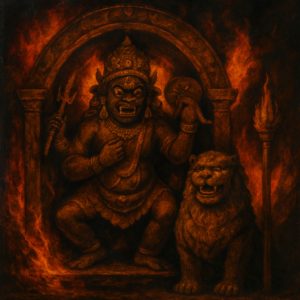
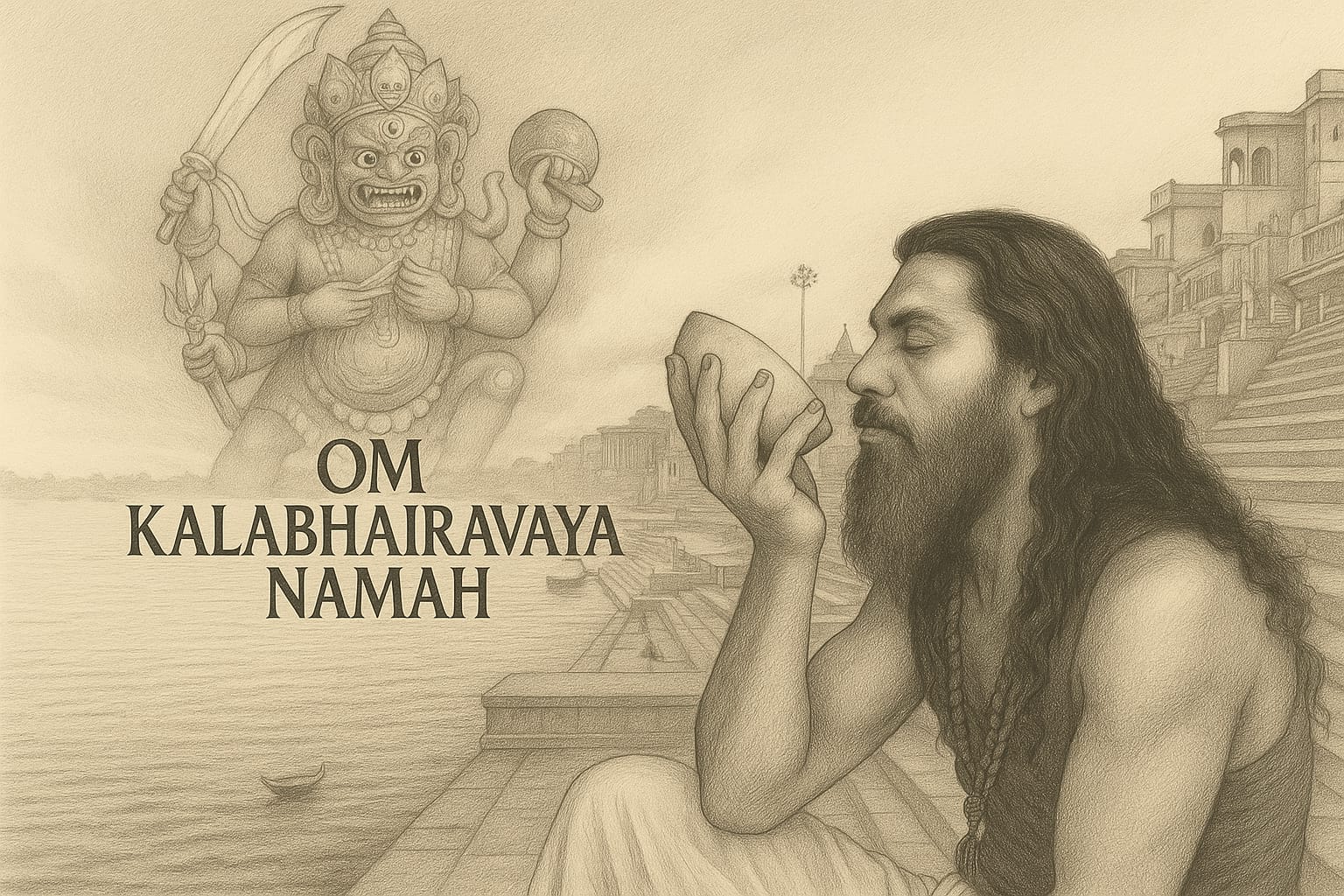
Each year, on the Krishna Paksha Ashtami of Kartika, devotees of Sanātana Dharma observe Kalabhairava Jayanti as the emergence of Kala Bhairava, the timeless guardian of Dharma. Bhairava is not an external god but the fierce, liberating intelligence within consciousness that dissolves illusion and reveals truth. He arises whenever humanity forgets Dharma, when ego begins to believe it can outlive Time itself. Between 2017 and 2020, Gurunatha walked the arduous and esoteric path of Bhairava Sadhana, rooted in the Natha and Kaula traditions. His journey began with a 48-day Anushttana at Manikarnika Ghat, the cremation ground of Kashi where the fire of mortality never ceases to burn. Amid ash and chanting, Gurunatha undertook this initiation—an intense inner and outer surrender where each pyre became his teacher and each rising flame his mantra. There, the illusion of impermanence dissolved, and the awareness of Bhairava was invoked in its rawest form.The Ramta Rishi Years
After this initiation, Gurunatha entered the life of a Ramta Rishi — a wandering ascetic who carries his altar within. In the Nātha Rishi tradition, a Ramta Rishi lives in spontaneous renunciation, moving through forests, mountains, and marketplaces with the same calm awareness. Every sunrise becomes an arati, every gust of wind a whisper from Śiva. For nearly four years, Gurunatha roamed through sacred mountains and riverbanks, often alone and fasting, practicing Bhairava-upasana amidst life’s unpredictable movements. As a Ramta Rishi, he walked the length and breadth of Bharata with the stoicism of a corpse — without desire, without need, untouched by praise or hardship, carrying only the breath of Shiva within him and the silence of the cremation ground in his heart.He later described those years as:
“A pilgrimage without destination—where the whole earth became my Kashi.”
To live as a Ramta Rishi is to walk with nothing and lack nothing. The wandering becomes worship, the world becomes the guru, and the yogi’s breath itself becomes mantra.The Bhairava Siddha Realization
Amid his nomadic austerity, realization dawned. In a moment of luminous stillness, Gurunatha experienced Sakshatkara— the direct recognition that Bhairava is none other than the Self. The seeker dissolved; only awareness remained. Through this awakening, he attained the state of a Bhairava Siddha — a perfected being who embodies the fearless clarity of Bhairava in living presence. The Bhairava Siddha is one who has crossed the frontier of death and realized the radiance that endures beyond decay.As Gorakshanatha declared:
“Mar Jogi Mar, Aisi Maut Mar — Ke Dobara Na Marna Pade.”
Die, O Yogi, die such a death that you never die again.
Through this inner death, Gurunatha was reborn as awareness itself; the silent witness of creation and cremation alike.The Abhisheka at Sri Adichulakanagiri Kshetra
Following his realization, Gurunatha’s Sakshatkara was ritually affirmed through an Abhisheka — a sacred consecration that formalizes inner awakening through Vedic and Tantric rites. This was performed at Sri Adichulakanagiri Kshetra, Harohalli, Karnataka, an ancient Siddha site known for its fiery lineage of yogic initiations. There, over nine months of Sevā in 2020, Gurunatha lived in silent service, tending to the temple and surrounding forest, meditating from the early hours to late nights and offering his realization back to the earth through seva. The Abhisheka at Adichulakanagiri was not a ceremony of status but of sanctification — a pouring of sacred waters and mantric fire that sealed his realization in the elements. The Siddhas and Saptarishis of the invisible lineage witnessed it through signs of peace and power. In that Kshetra quiet sanctum, his consciousness, once awakened, was anchored fully into this plane of action.The Descent of Śakti
On the sacred night of Mahalaya Amavasya 2020, the cycle reached its completion. The twin gurus of the lineage, revered as AdiShaktinatha, sent forth Gurunatha’s destined Shakti-Samdhatta, Moe Maa. Her descent fulfilled the cosmic law of Yamala — the joining of Śiva and Śakti, consciousness and energy, in balanced manifestation. In her arrival, the masculine current of ascetic fire found its complement in the feminine current of compassionate power. Together they formed the living Yamala — the sacred polarity of Bhairava and Bhairavī realized upon the earth.The Path’s Demanding Grace
Bhairava Sadhana is not for the faint-hearted. It demands an intimacy with mortality few can bear. To meditate beside the pyre is to burn away self-deception until only the indestructible remains. The flames of Manikarnika do not frighten the true sadhaka; they illuminate him.As Gurunatha expresses it:
“When you embrace death, you truly start living.”
In truth, Bhairava is not destruction — He is awakening. He burns only what is unreal.Passing the Torch — The Mrityunjaya Bhairava Sadhana
From this living realization arises Gurunatha’s offering to seekers today: a nine-month discipline called “Death & Resurrection – Mrityunjaya Bhairava Sadhana.” Conducted under the lineage of Rishikula, this path initiates chosen aspirants into the living fire of transformation. It involves mantra-sādhanā, daṇḍa-kriyā, silence, vigils, and meditation upon permanence. Its aim is not renunciation but resurrection — to awaken as the witness of one’s own dissolution.Those who feel called may write to Rishikula, sharing a personal statement of readiness. The sadhana is selective, for its fire must be entered only by those willing to burn in order to emerge anew.
The Legacy of Svatantra — The Fire of Light Without Heat
From Gorakshanatha to Gurunatha, the Bhairava current has never been a path of fear—it is the way of Svatantra, the self-born freedom that burns without consuming, the fire of light without heat. It is not destruction but disclosure—the illumination that reveals all forms and yet belongs to none. Bhairava’s flame lives in those who have ceased to resist impermanence. It is the gentle fire that refines awareness until it becomes transparent, the still blaze that neither wounds nor withers.As Gurunatha reflects:
“I have died so many times, it has become easy to be reborn every moment. That is the real freedom — Svatantra.”
On every Kalabhairava Jayanti, as the eternal flames of Manikarnika rise against the night, they do not mourn; they sing. Their whisper is ageless: beyond the ashes, beyond the breath, beyond all opposites—stands Bhairava, Svatantra itself—timeless, fierce, and free.